
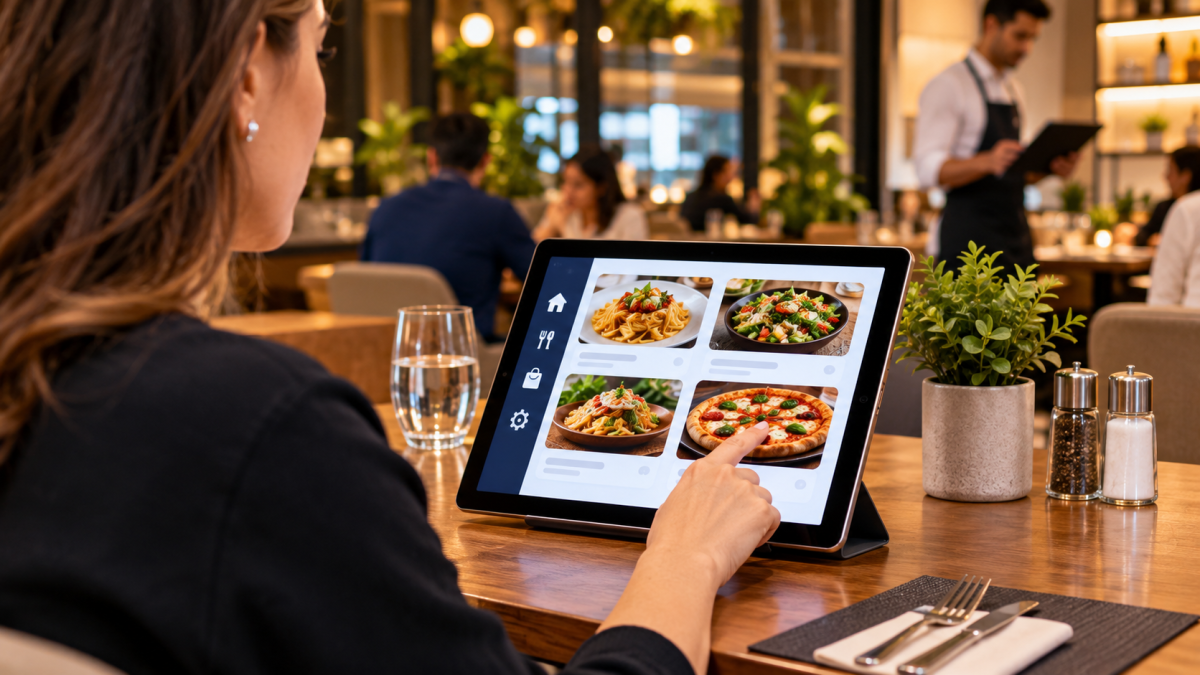

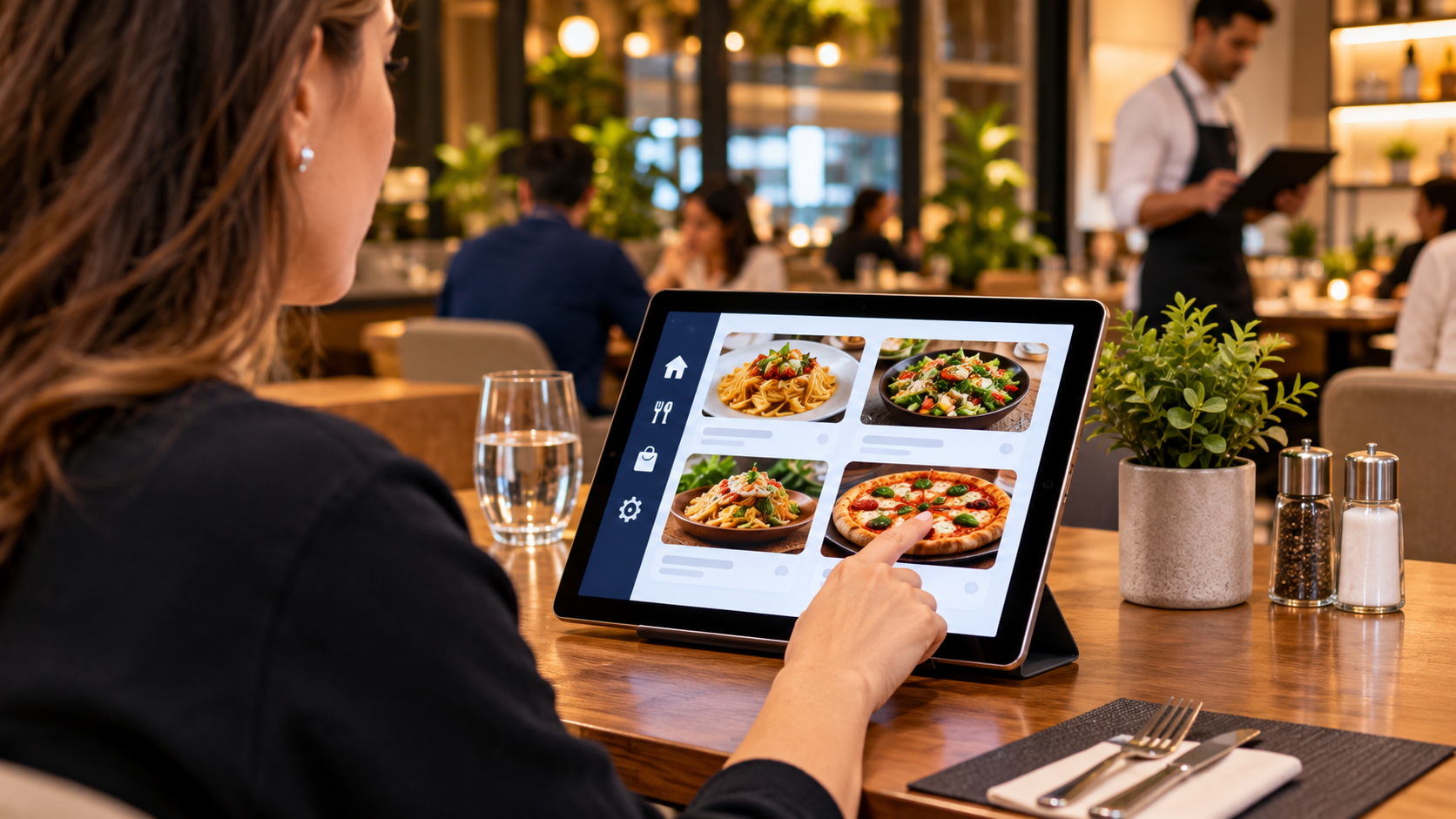
Walk into almost any busy restaurant in Pakistan today and you’ll notice something missing: the laminated menu card. In its place is a bright screen above the counter, a QR code on the table, or a tablet in the server’s hand. The shift isn’t cosmetic. Digital menus are quietly rewriting how people decide what to eat and how quickly they pay for it.
Why Restaurants Moved Away From Printed Menus
Printed menus have one fatal flaw — they freeze your pricing and your inventory in place. When chicken costs more this month, or a dish sells out at 8 PM, a paper menu can’t react. Digital menu systems can, instantly.
Electronic Menu Boards solve that problem at the point where it actually costs money: the moment a customer is standing at the counter deciding. Operators running a cloud-based restaurant POS software can change an item’s price, mark something unavailable, or push a new deal across every branch in seconds — no reprinting, no stickers over old prices.
Faster Ordering, Shorter Queues
The biggest measurable change is speed. Digital ordering systems cut the back-and-forth between customer and cashier. People read, decide, and commit before they reach the till. Self-ordering kiosks take this further — the customer builds the order themselves, and the kitchen display system receives it without a single keystroke from staff.
Smaller outlets don’t need expensive hardware to get there either; many now turn an Android device into a restaurant POS and run digital ordering from a tablet they already own.
For high-volume QSRs, shaving 30 seconds off each transaction during a dinner rush isn’t a small gain. It’s several more tables served per hour.
Digital Menus Sell More Than Paper Ever Did
A static menu describes food. A dynamic digital menu board sells it. Motion, high-resolution imagery, and timed dayparting — breakfast items in the morning, deals after sunset — put the right item in front of the right customer at the right moment.
Upselling also gets easier. When a combo upgrade appears as a visual prompt rather than a question a cashier has to remember to ask, attachment rates rise on their own. Many operators see noticeably higher average order values within the first few months of switching.
Better Data, Better Menu Decisions
Every tap on a digital menu is a data point. Restaurant management software connected to your menu tells you which items get viewed but rarely ordered, which deals actually convert, and which time slots drive the most revenue. Menu engineering stops being guesswork and becomes something you can measure.
The same logic applies online — the benefits of POS integration with online ordering mean your dine-in menu, delivery menu, and reporting all stay in sync instead of drifting apart.
What This Means for Customer Experience
Modern diners expect accuracy, allergen information, multiple payment options, and no surprises at checkout. Digital menus deliver all four. Contactless QR menus also remain popular with customers who prefer to browse on their own phone before ordering.
The restaurants winning right now aren’t simply the ones with the best food — they’re the ones that made ordering effortless. Pair that with disciplined restaurant operations and POS management, and the gains compound across every shift.
Frequently Asked Questions
1. What are Electronic Menu Boards?
+
Electronic Menu Boards are digital screens that display a restaurant’s menu, pricing, and promotions. They are managed through software, so prices, images, and item availability can be updated instantly across one or multiple locations.
2. Do digital menus actually increase sales?+
Yes. Restaurants using digital menu boards commonly report higher average order values, mainly because visual combo prompts and dayparting encourage upsells that staff often forget to mention.
3. Are digital menus suitable for small restaurants and cafés?+
They are. A single screen or a QR-based digital menu works well for small outlets, and the cost of one display is usually recovered quickly through saved printing costs and faster table turnover.
4. How do digital menus integrate with a restaurant POS system?+
A good digital menu connects directly to your POS and kitchen display system, so a price change, stock-out, or new deal reflects everywhere at once without manual re-entry.
5. Is a QR code menu the same as an Electronic Menu Board?+
No. A QR menu loads on the customer’s own phone, while an Electronic Menu Board is a screen installed in the restaurant. Most operators use both — the board for counter ordering, the QR menu for dine-in tables.