
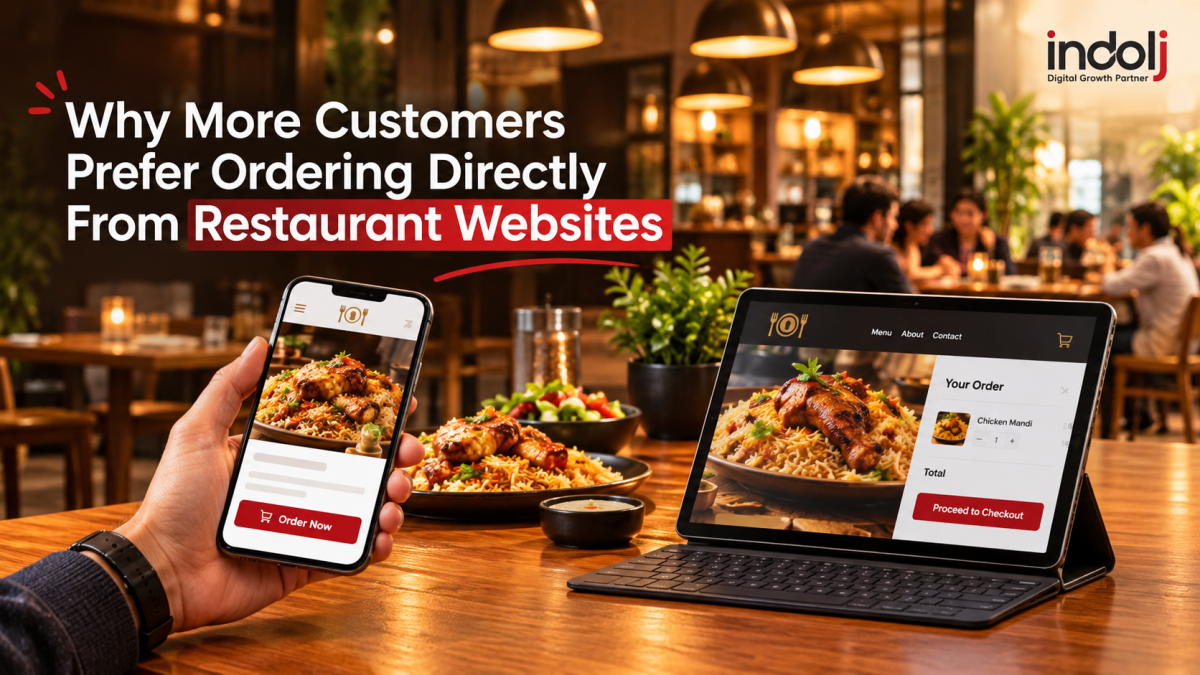

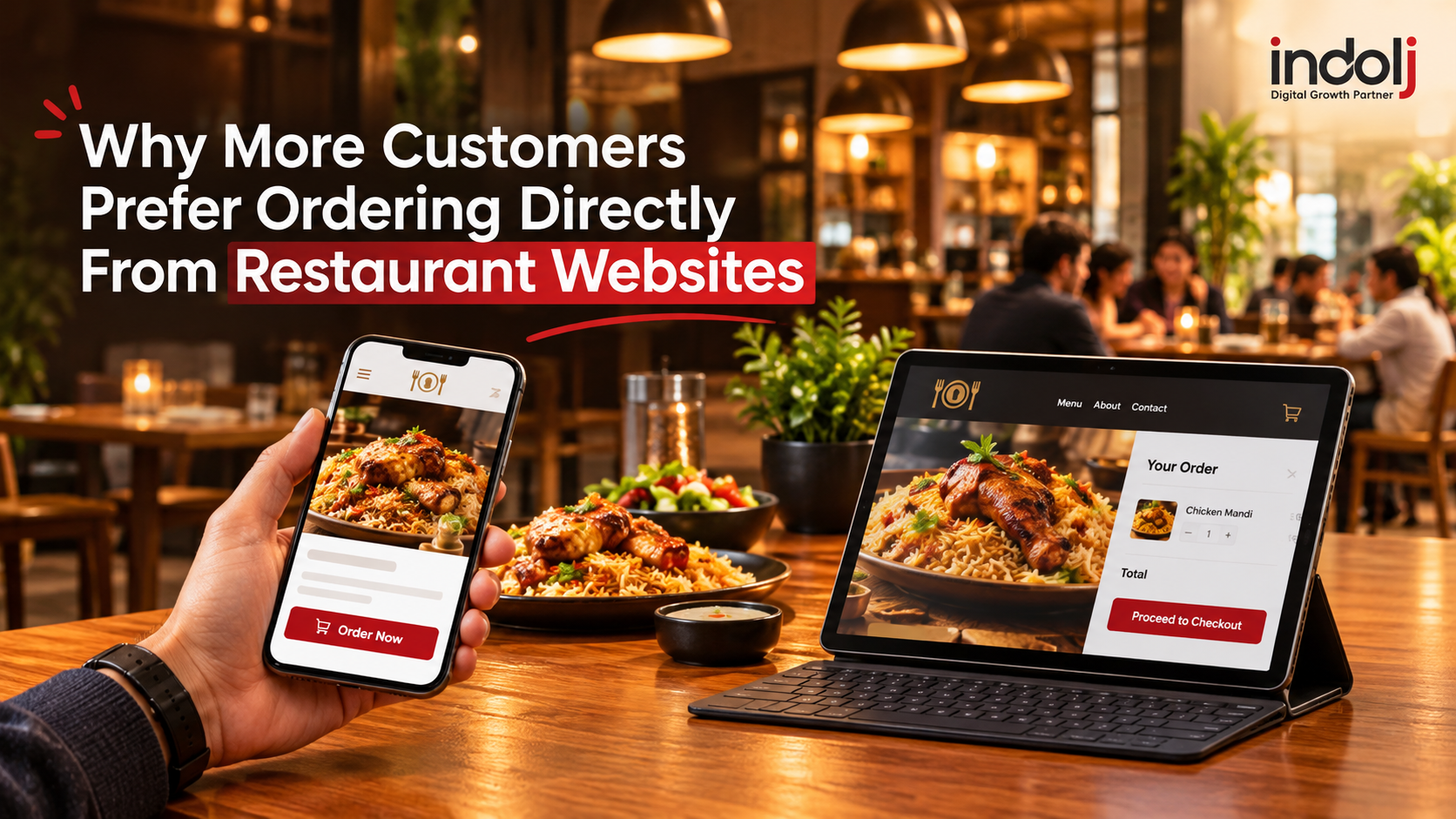
For the last few years, food aggregators trained everyone including restaurant owners to believe that online orders have to come from somewhere else. That assumption is quietly breaking down. Customers are increasingly skipping the app and going straight to the restaurant’s own website, and the restaurants that noticed early are keeping a much larger share of every rupee they earn.
The Commission Problem Nobody Talks About Openly
Aggregator commissions in Pakistan typically take a serious bite out of each order. On thin food-cost margins, that’s often the difference between a profitable delivery channel and one that simply keeps the kitchen busy.
A proper Online Food Ordering System on your own domain removes that cut entirely. The order comes in, the kitchen prints it, the payment settles to you. There’s no middle layer deciding how visible you are or how much you pay for that visibility this month.
Customers Get a Better Deal And They Know It
Here’s what’s actually driving the shift: customers have figured out that direct ordering is usually cheaper. No inflated menu pricing to absorb commissions, no surprise platform fees at checkout, and often better deals because the restaurant can afford to pass savings on.
Loyalty is the other half of it. A regular customer who orders the same biryani every Friday doesn’t want to scroll through forty competitors to find you. A clean restaurant online ordering website with saved addresses and a one-tap reorder button respects that habit.
You Own the Customer Relationship
This is the part most owners underestimate. When an order comes through an aggregator, the customer belongs to the aggregator. You don’t get the phone number, the order history, or permission to market to them.
Direct online ordering flips that. You learn who orders what, how often, and when they stop. That data lets you send a targeted SMS to lapsed customers, build a working loyalty programme, and plan inventory around real demand instead of guesswork. Connect it to a proper POS and the picture gets sharper still the benefits of POS integration with online ordering include one unified sales report instead of three systems that disagree with each other.
Control Over Your Menu, Pricing and Branding
On an aggregator, your brand is a thumbnail in a list. On your own site, you control the photography, the item descriptions, the upsell prompts, and how deals are presented. You can change pricing instantly, run a weekend-only offer, or hide an item that’s run out the same flexibility that makes digital menus so effective in-store.
Setting It Up Is Simpler Than Most Owners Expect
The common objection is that building an ordering website is a big technical project. It isn’t anymore. A modern restaurant POS software platform ships with online ordering built in your menu syncs automatically, orders land directly on the kitchen screen, and payments integrate with the wallets and cards your customers already use.
Indolj handles this end to end for restaurants across Pakistan, so the website, the POS, and the kitchen all run on one system rather than three stitched together.
A Practical Way to Start
You don’t need to abandon aggregators on day one. Most successful operators run both, then gradually shift customers over: a QR code on the table and on every delivery bag, a discount that applies only on direct orders, and staff trained to mention the website when regulars call.
Within a few months, the direct channel usually carries enough volume to change the economics of the whole operation.
Frequently Asked Questions
1. What is an Online Food Ordering System?+
An Online Food Ordering System is software that lets customers browse your menu, place orders, and pay through your own website or app. Orders flow straight into your POS and kitchen without manual entry.
2. Is direct online ordering really cheaper than using aggregators?+
Yes, in most cases. Aggregators charge per-order commission, while a direct ordering system usually runs on a fixed monthly or annual fee — so the more you sell, the bigger the saving.
3. Will customers actually use my restaurant’s website instead of an app?+
They will if ordering is easy and there’s a reason to. Faster checkout, saved addresses, and website-only deals are the three things that consistently move regular customers across.
4. Do I need a separate website to accept direct online orders?+
Not necessarily. Most restaurant POS platforms, including Indolj, provide a ready-made restaurant online ordering website linked to your existing menu and branding.
5. Can I use both aggregators and my own ordering website?+
Absolutely, and most restaurants should. Aggregators work well for discovering new customers; your own site is where you keep them and protect your margins.
Why More Customers Prefer Ordering Directly From Restaurant Websites