
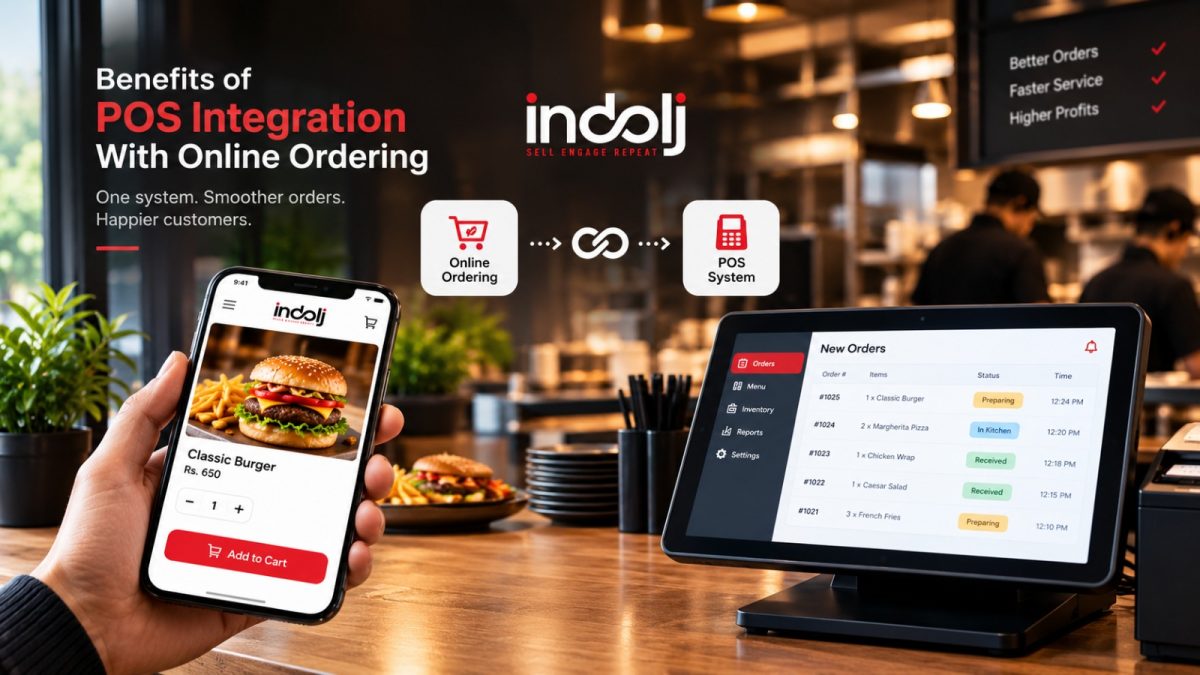

For restaurants, managing online orders efficiently is just as important as serving customers in-house. POS integration with online ordering connects digital orders with the restaurant’s point-of-sale system, helping streamline order processing, reduce manual entry, improve accuracy, and create a smoother experience for both staff and customers.
What Is POS Integration With Online Ordering?
POS integration with online ordering connects a restaurant’s online ordering system directly to its point-of-sale software. When a customer places an order online, the order can be transferred to the restaurant’s POS instead of requiring staff to enter the details manually.
This connection can help restaurants manage orders more efficiently while keeping menu, pricing, payment, and order information organized in one workflow.
How Does Restaurant POS Integration Work?
The process is designed to connect the customer’s online ordering journey with the restaurant’s internal operations.
A typical workflow looks like this:
Customer places an online order → Order reaches the ordering system → Order is sent to the POS → Kitchen receives the order → Restaurant prepares and fulfills the order
With the right integration, restaurant staff can spend less time switching between systems and more time focusing on preparing orders and serving customers.
POS Integration vs. Third-Party Ordering Platforms
Restaurants can accept online orders through third-party platforms or through their own online ordering system.
Third-party platforms can provide access to a wider customer base, but restaurants may also have to manage additional commissions, separate order management processes, and limited control over customer data.
With a direct online ordering system integrated with the POS, restaurants can have greater control over their ordering process and customer relationships. The exact costs and features depend on the ordering platform and restaurant’s setup.
Benefits of Integrating POS With Online Ordering
Improve Order Accuracy
Manual order entry can create opportunities for mistakes, particularly during busy periods. POS integration can transfer online order details directly into the restaurant’s system, reducing the need for employees to re-enter information.
Accurate orders can help reduce corrections, delays, and customer complaints.
Speed Up Order Processing
When online orders move directly into the restaurant’s workflow, employees do not have to repeatedly copy order information from one system to another.
This can help the kitchen receive orders sooner and make it easier for staff to organize incoming orders during busy hours.
Reduce Manual Work
Managing orders across multiple platforms can create unnecessary administrative work. An integrated POS and online ordering system can bring important order information into a connected workflow.
This allows restaurant employees to focus more on food preparation, customer service, and daily operations.
Improve the Customer Experience
Customers expect online ordering to be simple and convenient. A streamlined ordering process can make it easier for them to browse the menu, customize their selections, review their order, and complete checkout.
Fewer ordering errors and a smoother fulfillment process can also contribute to a better overall customer experience.
Support Direct Online Ordering
Direct online ordering gives restaurants another way to receive orders without relying entirely on external ordering marketplaces.
When the ordering system is connected to the restaurant POS, incoming orders can be managed through a more centralized process. Restaurants can also maintain greater control over their online ordering experience and customer interactions.
Make Better Use of Ordering Data
Online orders can provide useful information about customer purchasing behavior, popular menu items, ordering frequency, and peak ordering periods.
Restaurants can use this information to identify popular products, plan promotions, adjust menus, and make more informed marketing decisions.
For example, if a restaurant notices that a particular family meal is frequently ordered on weekends, it could create a relevant weekend promotion or highlight that meal more prominently on its online menu.
Encourage Customer Loyalty
An online ordering system can also support customer retention when combined with loyalty or rewards features.
Restaurants can use repeat-order information and loyalty incentives to encourage customers to return. Offers based on previous purchases can make promotions more relevant than generic discounts.
What Should Restaurants Consider Before Choosing a POS Integration?
Before integrating online ordering with a restaurant POS, businesses should consider several factors:
- POS compatibility: Check whether the ordering platform supports the existing POS system.
- Menu synchronization: Product names, prices, modifiers, and availability should remain consistent.
- Order management: Staff should be able to receive and manage online orders efficiently.
- Payment processing: The system should support the restaurant’s preferred payment methods.
- Reporting: Restaurants should have access to useful sales and ordering information.
- Customer experience: The ordering process should work smoothly across desktop and mobile devices.
Choosing an integration based on these factors can help restaurants build a more efficient online ordering workflow.
Streamline Your Restaurant’s Online Ordering
A connected POS and online ordering system can help restaurants simplify order management, improve accuracy, and provide a smoother digital ordering experience. Indolj helps restaurants across Pakistan accept online orders through a dedicated ordering system and connect digital ordering with restaurant operations.
If your restaurant is looking to manage online orders more efficiently and build a stronger direct ordering channel, explore how Indolj can support your restaurant’s online ordering workflow.
Frequently Asked Questions
What is POS integration with online ordering?
+
POS integration connects a restaurant’s online ordering system with its point-of-sale software so that digital orders can move into the restaurant’s existing order management workflow.
How does POS integration benefit restaurants?+
It can help improve order accuracy, reduce manual data entry, speed up order processing, and create a more connected workflow between online ordering and restaurant operations.
Can POS integration improve order accuracy?+
Yes. When online order details are transferred directly to the POS, staff may have less need to manually re-enter customer selections, which can help reduce entry-related mistakes.
Can online ordering work with an existing restaurant POS?+
It depends on the POS and online ordering platform. Restaurants should check compatibility and available integration features before choosing a solution.
Why is direct online ordering useful for restaurants?+
Direct online ordering can give restaurants greater control over their ordering channel, customer experience, and online sales process while reducing reliance on external ordering marketplaces.
Benefits of POS Integration With Online Ordering